Oxygen Concentrator Maintenance: Filters, Sieve Beds and Consumables
October 26, 2026
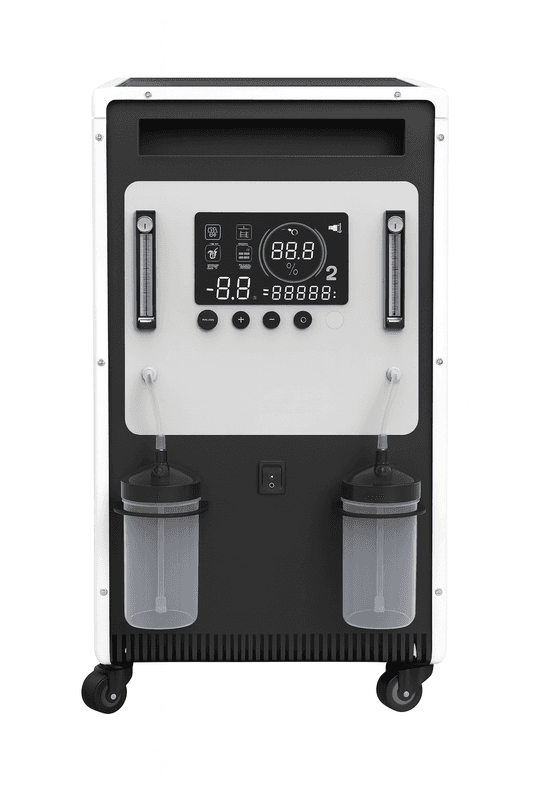
Your spare-parts shipment does not travel on the same tariff line as the machine, and most dealers find that out from a broker rather than from a supplier. In a ruling dated 31 March 2026, US Customs looked at three concentrator components and agreed with the importer on two of them, keeping them in 9019.20 with the machine — then classified the third, a cylindrical molecular sieve bed built from zeolite, metal, plastic, seals, solenoid valves and filter media, under 8421.99.0180, the line for parts of filtering or purifying machinery. One purchase order, two lines, two duty outcomes.
There is money on the other side of the same page. CBP has repeatedly classified stationary and portable concentrators under 9019.20.0000, and in at least one 2025 ruling found a concentrator eligible for subheading 9817.00.96, the duty-free provision for articles specially designed for persons with physical handicaps. Rulings bind only the importer who asked for them, so neither is a template — but a dealer who has never asked the question leaves the answer to the broker who prices the whole invoice at the highest line.
The service-item map
Maintenance here is three jobs with three different owners, and a quotation that lists "filters" as one line is hiding two of them. Fix the map before you fix the price.
| Item | Who handles it | What it needs | What a dealer should hold |
|---|---|---|---|
| Cabinet / gross particle filter | End user or carer | Washing and drying on a routine, replacement when the foam breaks down | Deep stock; cheapest part, most frequent call |
| Compressor intake filter | Dealer technician | Replacement at a stated interval; the cabinet must be opened | Stock per installed unit, not per order |
| Product / bacteria filter in the outlet path | Dealer technician | Scheduled replacement, with the patient circuit changed at the same visit | Stock as a pair with the intake filter |
| Humidifier bottle, cannula, tubing | End user | Consumables on a patient cycle | Sell as a kit; margin lives here |
| Molecular sieve beds | Workshop or return to base | Assembly replacement, then oxygen concentration verification before release | One or two assemblies per model in the field |
| Compressor | Workshop | Rebuild kit or assembly swap, hours-based | Order against a diagnosis, not on spec |
Replacement intervals belong to the model, not the category: ask for the service schedule of the model you are quoting, in hours or months, and refuse a generic figure. That schedule and your installed base set the stocking quantity — ask for both in writing with the quotation.
The 93 per cent question, and why it is not a release certificate
Every datasheet quotes an oxygen concentration, and buyers read it as a pharmacopoeial guarantee. It is not. The USP monograph Oxygen 93 Percent defines oxygen produced from air by the molecular sieve process as not less than 90.0 and not more than 96.0 per cent by volume, with carbon dioxide limited to 300 ppm in the current text — an older edition used a percentage, so the edition matters. The European Pharmacopoeia carries a parallel monograph with the same 90.0 to 96.0 per cent v/v band.
The part that gets missed: pharmacopoeial commentary states the monograph applies to oxygen used at the place where it is produced and not to individual concentrators, a point Spain's medicines agency has also made about hospital units. So "93 per cent ± 3" on a nameplate is a device performance claim verified against ISO 80601-2-69, not a drug release specification. Two consequences for a dealer:
- Ask which edition of ISO 80601-2-69 the test report names. The 2014 edition has been superseded and a further revision has been in the catalogue pipeline, so a report with no edition year on it is a report you cannot defend to a tender committee.
- Ask whether the unit has an oxygen concentration monitor fitted, and what its alarm thresholds are. On a serviced fleet that monitor is what tells you a sieve bed is failing before the patient does.
Where two quotations for the same concentrator differ
- Carton content. Spare filter sets, humidifier bottle, trolley, remote — a cheaper unit with an empty carton costs more by the time it reaches a patient.
- Service kit availability. A model with no published kit is a model you will cannibalise.
- Sieve beds sold as an assembly or not at all. If the only answer is "return to base", your warranty cost is freight.
- Warranty scope. Parts only, or parts and labour, and whether the compressor carries its own term.
- Oxygen concentration monitor fitted or optional. A line item on some platforms.
- Voltage and frequency. 220 V/50 Hz and 110 V/60 Hz are two SKUs, not a switch setting; the compressor differs. Lock it at the purchase order and do not accept a transformer as the answer.
RFQ fields, ordered by how much they move the number
- Destination market and the standard edition you must evidence there.
- Flow rates and the duty cycle you expect — continuous clinical use is not home use.
- Voltage and frequency per unit, with the plug type.
- Oxygen concentration monitor fitted or not.
- Spare parts kit content and price per kit, quoted next to the machine, and the MOQ that applies to each.
- Warranty term and scope, split into parts and labour.
- Parts availability guarantee in years from end of production.
- Factory test record required per unit, whether serial numbers are reported in advance, and your annual volume and service network.
Inspection, testing and the AQL question
Equipment is not a sampling commodity the way consumables are. Every unit should pass a functional test with a record: oxygen concentration at rated flow, flow accuracy, noise, alarm function and a run-in period — per serial number, not a batch certificate. AQL sampling under ISO 2859-1 general inspection level II still has a place — on cartons, accessories and cosmetic condition — and a supplier who offers you "AQL 1.5, per EN 455-1" for the machines themselves is quoting an examination-glove regulation at you: that figure is the EU glove number, with 2.5 applying in the US under 21 CFR 800.20. Neither has anything to do with a concentrator.
Ask for serial number ranges to be reported before the container is sealed, so your service database is populated on arrival. We accept the inspection company you nominate, or we use the inspection company we work with on a continuing basis. Put the functional test record per serial number into the purchase order, and ask for its content to be stated in the quotation.
Packing, freight and the tariff lines
Concentrators are a weight-and-cube mix: a 5 L stationary unit is bulky and fragile, and packaging is part of the warranty conversation, because transit damage shows up as DOA.
| Commercial term | What to fix in the purchase order |
|---|---|
| Packing | Carton with moulded inserts per unit, carton dimensions and gross/net weight per model, drop-test standard the pack was validated to |
| Pallet and container | Units per pallet and per 20ft / 40ft / 40HQ taken from the loading plan rather than estimated; mixed loads of machines and spare parts declared separately |
| Incoterm and port of loading | State both. An EXW number, a FOB Ningbo number and a DDP number are three different prices; compare only like with like |
| HS lines | Whole units have been classified under 9019.20 in recent CBP rulings; a sieve bed assembly was classified under 8421.99 as a filtering-machinery part; and subheading 9817.00.96 was found applicable to a concentrator in one 2025 ruling. Check all three against your own market before you compare our number with a DDP quote |
| Spare parts on the invoice | List parts on their own lines with their own HS codes. A packing list reading "oxygen concentrators and accessories" invites the broker to apply the machine line to the parts |
| Price basis | Indicative USD per unit and per service kit, with a stated validity window rather than an open-ended price |
Price, minimum order quantity and lead time are confirmed with each quotation, against your specification and destination market. A figure quoted without those two inputs is a placeholder, whoever hands it to you — and on this product the spare parts kit has to be priced in the same breath as the machine.
Regulatory status and responsibility
| Market | Route for oxygen concentrator equipment |
|---|---|
| US | Portable oxygen generator, 21 CFR 868.5440, Class II, product code CAW, reviewed by the anesthesiology panel; premarket notification applies, and establishment registration and device listing sit alongside it |
| EU | Medical device under Regulation (EU) 2017/745; the class and conformity assessment route follow from the Annex VIII rules for active therapeutic devices, and the declaration of conformity states both |
| UK | UKCA route, mirroring the EU structure |
What we can state today: a group company holds quality management system certificates to ISO 13485:2016 and ISO 9001:2015 (certification body ZQHX, IAS-accredited; valid to November 2028), and their certified scope includes the sale for export of oxygen concentrators and nebulizers.
Ask for the regulatory status and the document set for your destination market with the quotation, rather than a generic certificate pack.
Three fields belong in your supplier file before the first container: the legal manufacturer named on the rating plate and the declaration of conformity, the EU responsible person or authorised representative, and the US agent of record for the US market. For a serviced product these are not formalities — they are who signs the field safety notice if one is ever needed. Ask every supplier for all three in writing; we confirm ours for your destination market with the quotation.
Warranty, DOA and parts availability
This is the section most equipment quotations leave out, and it is where a dealer's real cost sits.
- Warranty start date. Shipment or commissioning. On sea freight plus distributor stock, that difference is routinely months of cover.
- Scope. Parts only, or parts and labour, and whether the compressor and the sieve beds carry their own terms.
- DOA handling. What counts as DOA, the window, who pays the return freight, and whether a replacement ships before the failed unit arrives.
- Parts availability. Years from end of production, in writing. A platform that disappears from the parts list in year three turns your installed base into a liability.
- Service documentation. Service manual, parts exploded view, fault codes and the oxygen concentration verification procedure after a sieve bed change.
Ask every supplier for all five in writing; for ours, we confirm the warranty and parts availability terms per model with the quotation rather than left to a warranty card. Get them in the same document as the price, because a warranty term quoted after the price has already been agreed is a term you cannot trade against.
Change control and serial traceability
Change control is where the third order goes wrong rather than the first. A mid-series change of compressor or sieve supplier is the most common one, and the symptom is a service kit that no longer fits half your fleet. Ask for a product change notification policy in writing: how many working days before a change of compressor, sieve supplier, controller board or firmware, whether your written agreement is required, and whether the serial number range marks the change. Then ask how the serial number decodes and where it is printed, because that is what your technician reads down the phone.
Ask for serial number ranges to be confirmed against any change in bill of materials, and for the superseded service kit to stay available for the fleet already shipped.
Our own policy: we notify specification changes in writing; that notification is for your records — we do not hold production for a written approval from you. If your service operation needs an approval gate before a bill-of-materials change reaches your fleet, raise it at the purchase order stage so it sits in the terms rather than in an assumption.
When a sieve bed replacement is the wrong purchase
On a small stationary unit at the end of its compressor life, a sieve bed assembly plus inbound freight plus bench time can approach the landed cost of a new machine, and the rebuilt unit still carries an old compressor. Price the repair against a replacement before you quote the hospital, and tell them which you did. That wins more fleet business than the margin on the part.
What to send us
Send the destination market, the flow rates and voltage split, whether the units need an oxygen concentration monitor, and your annual volume. Ask for the model mix with spare parts kits priced alongside the machines, carton and pallet figures per model, and the test report edition your tender needs.
Start from the oxygen concentrator supplier range or the wider oxygen and respiratory equipment wholesale category. For the fleet workhorses see the 5L oxygen concentrator distributor and 10L oxygen concentrator supplier pages, and for continuous clinical duty the 20L oxygen concentrator page. How to read the rest of the datasheet is covered in our oxygen concentrator specifications guide.
FAQ
How is the MOQ set — by unit or by model? Price, minimum order quantity and lead time are confirmed with each quotation, against your specification and destination market. Ask for the minimum per model and voltage configuration, since voltage is a separate build, and whether spare parts kits can ride on the same order.
Can we get a sample unit before a volume order? We supply samples free of charge. Use the sample to have your technician open the unit and check that the service items above are reachable.
What lead time applies, and what does it include? Ask whether the quoted lead time includes configuration and functional testing, and whether the clock starts from configuration sign-off where a voltage or language variant is involved, and have the basis written into the order acknowledgement.
Which documents come with the shipment? Ask for the invoice and packing list with machines and parts on separate HS lines, the functional test record per serial number, the declaration of conformity where one applies, and the service manual and parts list, and fix that list in the purchase order.