Portable Oxygen Concentrators and 1L to 20L Stationary Oxygen Concentrators for Distributors and Clinics
Portable oxygen concentrators POC4 and POC8 plus stationary 1L to 20L oxygen concentrators HP-V01 to HP-V06 for distributors, DME dealers, rental fleets, clinics and hospital wards.
Key takeaways
- Seven listings cover the full range: six stationary units rated 1L, 3L, 5L (two models), 10L and 20L per minute, plus the POC4 and POC8 portable oxygen concentrators.
- The flow number in each stationary model name is the maximum rated flow; match it to the highest prescribed flow with some headroom and compare purity at rated flow.
- Portable and stationary units, with accessories and spare batteries, can be quoted together for distributors, DME dealers and rental fleets.
This collection covers every oxygen concentrator HOPE INTERNATIONAL supplies: the POC4 and POC8 portable oxygen concentrator models for ambulatory use, and six stationary units rated from 1L to 20L per minute for homecare, clinics and hospital wards. It is a sub-collection of our oxygen and respiratory range, which also lists nebulizers, suction machines and ventilators.
Oxygen concentrators in this collection
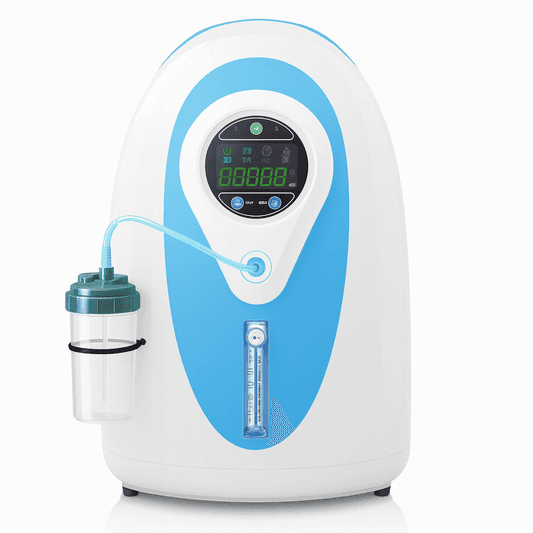
- HP-V01 1L oxygen concentrator: compact plug-in unit for household and elderly-care programs where the prescribed flow stays within 1 L/min.
- HP-V02 3L oxygen concentrator: the step between 1L and 5L for home oxygen programs, care homes and rental fleets.
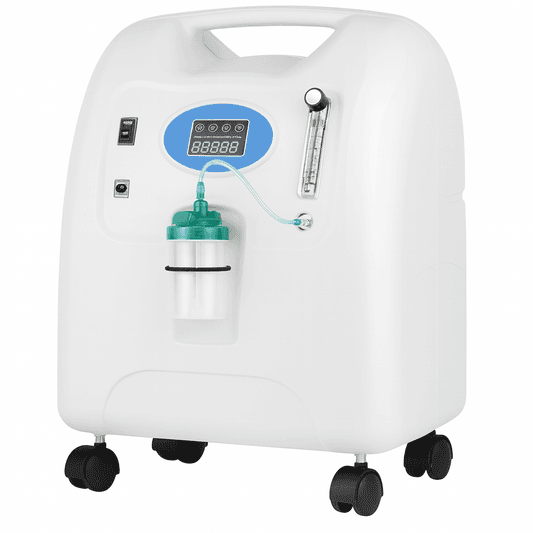
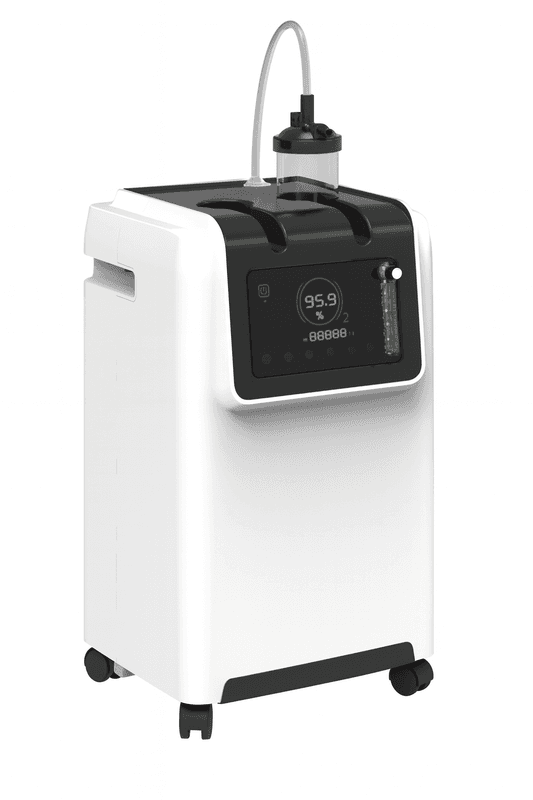
- HP-V03 5L oxygen concentrator: homecare model with a top carry handle and casters for moving between rooms.
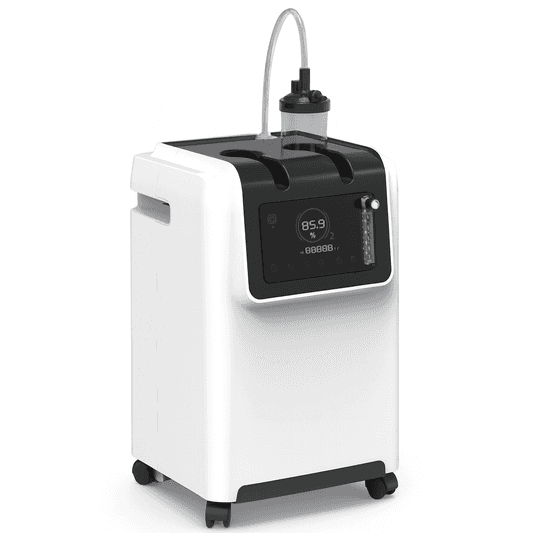
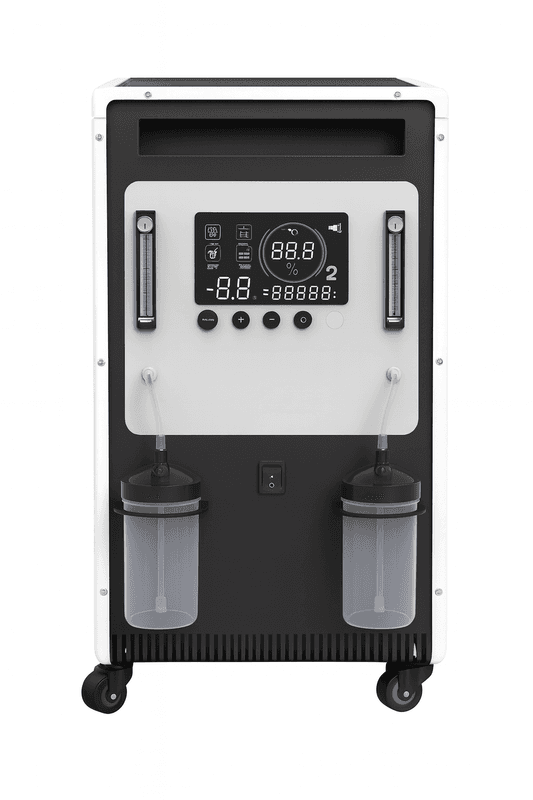
- HP-V04 5L oxygen concentrator: upright cabinet on casters for clinics, treatment rooms and wards.
- HP-V05 10L oxygen concentrator: upright cabinet for treatment rooms, wards and home patients prescribed above 5 L/min.
- HP-V06 20L oxygen concentrator: floor-standing institutional unit for wards, emergency rooms and facilities without piped oxygen.
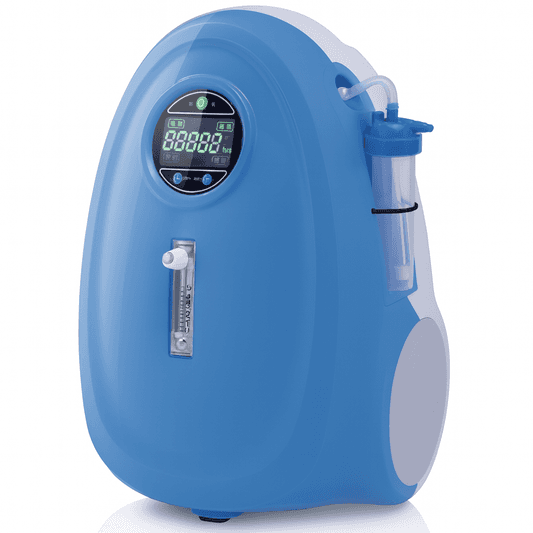
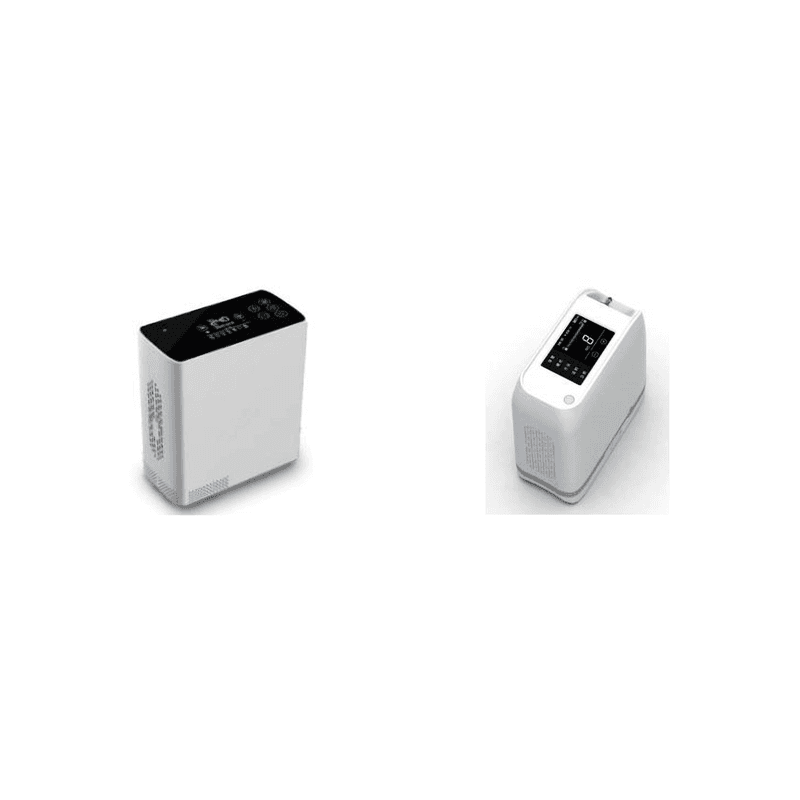
- POC4 and POC8 portable oxygen concentrators: battery-powered units for patients who need oxygen while moving; delivery mode, battery runtime and weight are on each model's datasheet.
Choosing the flow rating: 1L, 3L, 5L, 10L or 20L
The number in each stationary model name is the rated flow in liters per minute. It is the maximum the unit delivers, not the flow every patient uses, so match it to the highest flow that will be prescribed and leave some headroom so the machine does not run at its limit all day.
- 1L and 3L (HP-V01, HP-V02): low-flow household, elderly-care and care-home programs; the 3L unit adds headroom over 1L while keeping a small footprint for a bedroom.
- 5L (HP-V03, HP-V04): the flow class many home oxygen programs and rental fleets standardize on. Choose 5L when prescriptions may exceed 3 L/min or when one unit will serve different patients over time. The HP-V03 is the homecare body; the HP-V04 is the clinic and ward cabinet.
- 10L (HP-V05): treatment rooms, wards and home patients whose prescriptions exceed 5 L/min; the unit can run below its maximum for most patients.
- 20L (HP-V06): hospital wards, emergency departments and district or field hospitals without a central oxygen supply, or backup capacity alongside cylinders or a pipeline. Ask for the outlet configuration before planning multi-patient use.
Whichever class you choose, compare purity at the full rated flow (not only at low settings), sound level, rated power, alarms and weight on the spec sheet sent with the quotation, and confirm voltage, frequency and plug type for the destination country.
Portable vs stationary oxygen concentrators
Stationary units run on mains power and deliver higher continuous flow, which suits home use at night and ward use. A portable oxygen concentrator trades flow capacity for battery operation and lower weight, so a patient is not tied to a wall outlet or a cylinder when moving around the home, going outdoors or attending appointments. Many homecare providers and rental fleets supply one of each: a 5L or 10L stationary unit for night use and a POC4 or POC8 for the day. The two portable models differ in control layout (the POC8 has its display on the front face, the POC4 has its display and buttons on the top panel); delivery mode (pulse dose and/or continuous flow), settings, battery type and runtime, weight and noise level are stated on each model's datasheet sent with the quotation. Round-the-clock use depends on the model's duty rating and charging setup, so plan spare batteries or mains operation for long sessions.
Oxygen concentrators wholesale for distributors and rental fleets
HOPE INTERNATIONAL supplies oxygen concentrators wholesale to medical equipment distributors, DME dealers, rental companies, homecare programs and hospital tenders. To receive an accurate quotation, state the models and quantity per model, the destination country with mains voltage, frequency and plug type, accessories per unit (nasal cannulas, humidifier bottles and spare filters, and for portable units spare batteries, a car charger or carry bag), carton marking or distributor labeling needs, and the documents your importer or tender requires. Stationary units, portable units, nebulizers and oxygen consumables can be quoted together for one consolidated shipment. Certificates, declarations of conformity and test reports for the specific product and destination market are provided with the quotation. For nebulizers, suction machines and ventilators, see the parent collection Oxygen Concentrators and Nebulizers.
Frequently asked questions
+Which oxygen concentrator flow rating should a distributor stock first?
Most home oxygen programs and rental fleets standardize on 5L: the HP-V03 for homecare and the HP-V04 for clinics and wards. The 1L and 3L units sit below it and the 10L and 20L units serve wards. Match the rated flow to the highest flow that will be prescribed, with headroom, and compare purity at rated flow on the datasheets.
+What is the difference between a portable oxygen concentrator and a stationary one?
A stationary unit runs on mains power and gives higher continuous flow for home and ward use. A portable unit runs on a rechargeable battery with lower weight and lower flow capacity, for patients who need oxygen while moving. POC4 and POC8 are our portable models; HP-V01 to HP-V06 are stationary.
+What oxygen concentrator maintenance should a rental fleet plan for?
In general, the air filters are cleaned or replaced on a schedule, the humidifier bottle is cleaned between patients, and the molecular sieve beds that hold back nitrogen are checked when purity drops. Ask for the maintenance schedule and spare-parts list of the specific model with your quotation.
+Do you sell oxygen concentrators wholesale to rental companies and DME dealers?
Yes. We quote stationary and portable models to medical equipment distributors, DME dealers, rental companies, homecare programs and tenders. State the models, quantity per model, destination voltage and plug, accessories per unit and the documents your market requires, and each item is confirmed in the quotation.
+Are the units available for 110 V and 220 V markets?
Tell us your mains voltage, frequency and plug type (for example 110-120 V / 60 Hz or 220-240 V / 50 Hz) when you request a quote. The electrical version available for each model is confirmed in the quotation.
+Which documents are provided with oxygen concentrators for medical procurement?
Whether a model is supplied with medical-device documents depends on the destination market. Certificates, declarations of conformity and test reports for the specific product and destination market are provided with the quotation. Share your tender or importer requirements and we confirm what is available before you bid.