Autoclave Cycles Explained: Class B vs N vs S and Load Types
October 2, 2026
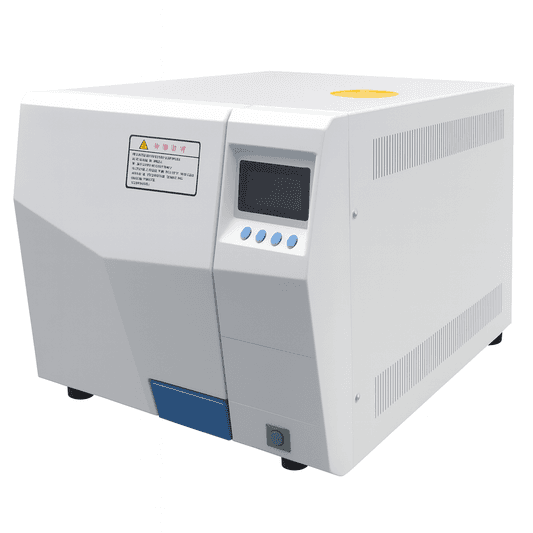
Two tabletop autoclaves can sit side by side, hold the same volume, reach the same temperature, and still be completely different machines. The difference is not the chamber — it is what happens to the air inside it before the steam arrives, and that single distinction is what the Class B, N and S labels describe.
Getting it wrong is expensive in a specific way: a practice that buys a Class N sterilizer and then needs to process wrapped instruments has not bought a cheaper autoclave, it has bought the wrong one. This guide explains what each class can and cannot process, how the cycles differ, and which routine tests prove the machine is doing its job. It follows on from our comparison of tabletop versus vertical autoclaves, which covers the physical formats.
Why Air Is the Enemy
Steam sterilization works because saturated steam condenses on a cold surface, releasing a large amount of energy and heating that surface almost instantly. Any air left in the chamber breaks the mechanism. Air pockets do not carry that energy, and — crucially — air does not travel into a narrow lumen or through a wrapped porous pack on its own. A trapped air bubble at the tip of a dental handpiece is a place where sterilization simply does not happen, no matter what the chamber gauge reads.
So the engineering question for every autoclave is: how thoroughly does it remove air before admitting steam? Class N, S and B are three answers to that question.
The Three Classes Under EN 13060
EN 13060, the European standard for small steam sterilizers, divides machines into three types by the loads they are able to sterilize.
| Class | Air removal | Loads it can process | Typical setting |
|---|---|---|---|
| N (Naked) | Gravity displacement — steam pushes air down and out | Unwrapped solid instruments only | Basic clinics, beauty and tattoo, laboratories with simple solid loads |
| S (Specified) | Varies by design; usually some assisted air removal | Only the loads the manufacturer specifies — must be read off the datasheet | Practices with a defined, unchanging instrument set |
| B (Big / small-B) | Fractionated pre-vacuum — repeated vacuum and steam pulses | All load types: solid, hollow and porous, wrapped and double-wrapped | Dental and medical practices, surgeries, anywhere instruments are wrapped for storage |
Class N is the simplest and cheapest. Steam entering the chamber displaces air downward through a drain. It works for solid, unwrapped instruments — and only those. Anything wrapped, anything with a lumen, and anything porous is out of scope. A Class N machine also cannot maintain sterility after the cycle, because an unwrapped instrument is exposed the moment the door opens: instruments must be used immediately.
Class B is the clinical benchmark. A fractionated pre-vacuum phase alternates vacuum pulls with steam injections, evacuating air from the chamber and from inside packs and lumens before the sterilization phase begins. After sterilization it typically runs a vacuum drying phase, so wrapped packs come out dry and can be stored sterile until use. That storage capability — not just the wider load range — is what makes Class B the right answer for most practices.
Class S is the category that causes confusion, because it is defined by the manufacturer rather than by the standard. A Class S sterilizer is intended for the loads the manufacturer specifies, and those specifications genuinely differ between machines. Some Class S units handle single-wrapped solid instruments and simple hollow loads; others are much more limited. Never buy a Class S autoclave on the class letter alone — read the load table in its documentation and check your actual instrument list against it, item by item.
Load Types: The Vocabulary That Decides the Class
The class letters only make sense against the load definitions.
| Load type | Examples | Why it challenges the sterilizer |
|---|---|---|
| Solid | Forceps, scissors, probes, mirrors | Least demanding — steam reaches all surfaces easily |
| Hollow | Dental handpieces, cannulae, tubing, suction tips | Air trapped in a narrow lumen resists displacement; needs active air removal |
| Porous | Textiles, gauze, cotton, wrapped packs | Absorbs steam and holds air; needs vacuum to draw steam through the mass |
| Wrapped / double-wrapped | Any of the above, pouched or wrapped for storage | The wrap is a further barrier to air removal and to drying |
The buyer's test is simple: list the instruments you actually reprocess, mark each as solid, hollow or porous, and note whether you wrap for storage. If anything is hollow, porous or wrapped, you need Class B — or a Class S whose documentation names that load type.
Cycle Temperatures and Holding Times
Steam sterilization runs in two established temperature bands, and the choice is dictated by what the instrument can tolerate.
| Cycle | Temperature | Typical holding time | Used for |
|---|---|---|---|
| Standard instrument cycle | 134 °C | Commonly around 3 minutes minimum, longer where required | Metal instruments, handpieces, most routine reprocessing |
| Delicate / low-temperature cycle | 121 °C | Commonly around 15 minutes | Heat-sensitive plastics and rubber, some liquids and media |
| Prion cycle | 134 °C | Extended — set by national guidance | Where local guidance requires an extended exposure |
A note on reading these numbers: the holding time is the sterilization phase only. Total cycle time is much longer, because it includes the air-removal phase at the start and the drying phase at the end. A Class B cycle including drying commonly runs far longer than the holding time suggests, and drying is often the longest single segment. When you compare machines, compare total door-to-door cycle time for a realistic wrapped load — that is the number that determines how many instrument sets a practice needs to own.
Holding times and validated cycle parameters come from the machine's own documentation and from the validation of the process under ISO 17665, the international standard for moist heat sterilization of health care products. Do not transfer a cycle setting from one machine to another.
The holding times in the table above are typical industry ranges, not the validated parameters of any specific model. For a given sterilizer, the cycle times to quote are the ones in its manual and its ISO 17665 validation record.
Water Quality: The Most Common Cause of Early Failure
Autoclaves are unforgiving about feed water. Tap water carries dissolved minerals that deposit inside the chamber, the generator and the valves, and scale is the single most frequent cause of premature failure and of instrument staining. Distilled, demineralized or reverse-osmosis water is the requirement, not a recommendation, and the machine's documentation will state the water quality it needs.
For a distributor, this matters commercially: bundling a water treatment unit or advising on it at point of sale prevents the warranty claims that otherwise arrive in year one. It belongs on the equipment list alongside the sterilizer itself — see our small clinic equipment checklist for how it fits into a practice's opening budget.
Proving the Cycle Worked: Indicators and Tests
A sterilizer that reaches temperature has not necessarily sterilized anything. Routine monitoring uses three layers.
Physical monitoring. The printout or data log of temperature, pressure and time for every cycle. This is the baseline record, and a machine with a printer or data export is materially easier to run under any quality system.
Chemical indicators. ISO 11140-1 defines classes of chemical indicator, each verifying something different — from simple process indicators that show a pack has been through a cycle, to indicators designed to respond to specific cycle variables. Two specific tests matter for air removal:
- The Bowie-Dick test is a process challenge device for pre-vacuum sterilizers that checks air removal and uniform steam penetration into a porous load. It is a daily test in many settings and is the standard proof that the vacuum system is working. Test packs for this purpose are addressed under ISO 11140 (with Class 2 indicators as an alternative to the traditional Bowie and Dick-type test covered in ISO 11140-4, and test packs in ISO 11140-5).
- The helix test uses a long narrow tube leading to a capsule holding an indicator, simulating a hollow instrument. It is the corresponding challenge for hollow loads, addressed under ISO 11140-6. For any practice reprocessing dental handpieces or cannulae, this is the relevant daily challenge.
Biological indicators. Spore-based indicators under the ISO 11138 series give a direct microbiological challenge. They are used periodically rather than every cycle, and are the strongest single evidence that a process is lethal.
In the United States, the reference document for steam sterilization practice in health care facilities is AAMI ST79, which sets out monitoring frequencies and record-keeping expectations in detail. European practice references EN 13060 for small sterilizers and EN 285 for large ones, with process validation under ISO 17665.
Buying Notes for Distributors
| Check | What to confirm before ordering |
|---|---|
| Class and load table | For Class S especially: the manufacturer's named load types, matched against the customer's instrument list |
| Chamber volume and usable tray area | Usable area, not nominal litres — trays and racks consume space |
| Total cycle time with drying | For a realistic wrapped load, not the fastest advertised cycle |
| Documentation and traceability | Printer, USB or network logging — increasingly a tender requirement |
| Water system | Required water quality, and whether a treatment unit is included |
| Electrical supply | Voltage, frequency and plug type for the destination market |
| Consumables and spares | Door gasket, filters, indicator supply — the recurring revenue line |
Sterilizers draw significant power and are unforgiving about voltage mismatch — confirm the destination supply before the order ships.
FAQ
What does the B in Class B stand for? The letter comes from the "big small" sterilizer concept — a small sterilizer capable of the load range associated with large hospital sterilizers. Practically, Class B means fractionated pre-vacuum air removal and the ability to process solid, hollow and porous loads, wrapped and double-wrapped.
Can a Class N autoclave sterilize wrapped instruments? No. Class N is for unwrapped solid instruments only, and the instruments must be used immediately after the cycle because nothing maintains their sterility.
Is Class S a compromise between N and B? Only loosely, and the letter alone tells you nothing. A Class S sterilizer processes the loads its manufacturer specifies. Always read the load table in the documentation against your own instrument list before buying.
Why is my cycle so much longer than the stated holding time? Because the holding time is only the sterilization phase. Air removal at the start and drying at the end usually account for most of the total, and drying is typically the longest segment on a wrapped load.
How often should the Bowie-Dick and helix tests be run? Frequency follows national guidance and the applicable practice standard — daily testing is common for pre-vacuum machines. Confirm what your customer's local guidance requires, since it drives their consumables order.
Can I use tap water? No. Use distilled, demineralized or reverse-osmosis water to the quality stated in the machine's documentation. Scale from tap water is the most common cause of early failure and instrument staining.
Specifying sterilizers for a clinic, a dental practice or a distribution programme? Tell us the instrument types, the daily throughput and the destination market, and we will match the class, chamber size and cycle set — and quote the consumables to go with it. → See the autoclave range or request a quote
Sources consulted: EN 13060 (small steam sterilizers — Type N, S and B definitions and load types); EN 285 (large steam sterilizers); ISO 17665 (sterilization of health care products — moist heat, process validation); ISO 11140-1 (chemical indicators — general requirements and classes); ISO 11140-4 (Class 2 indicators as an alternative to the Bowie and Dick-type test); ISO 11140-5 (Bowie and Dick-type test packs); ISO 11140-6 (helix/hollow-device process challenge); ISO 11138 series (biological indicators); AAMI ST79 (US reference for steam sterilization practice).