Setting Up a Small Clinic: Essential Equipment Checklist & Budget
September 27, 2026
Opening a small clinic is mostly a licensing and staffing project — but the equipment list is where the budget lives, and where new operators most often overspend on the wrong things. The good news: a general-practice clinic needs a surprisingly short list of essentials, and almost everything else can be phased in once patient volume proves the demand. Here is a room-by-room small clinic equipment list, with honest notes on where the money should go first.
Start with the Services, Not the Shopping List
Before pricing anything, write down the ten exam and treatment types you expect to perform most in the first two years. That list — not a catalog — decides whether you need imaging on day one, what your treatment room must handle, and which purchases can wait. Licensing authorities in many countries also publish minimum equipment requirements for clinic registration; obtain that list early, because it overrides any generic checklist, including this one.
Consultation and Diagnostics
The core of daily practice, and mostly low-cost items:
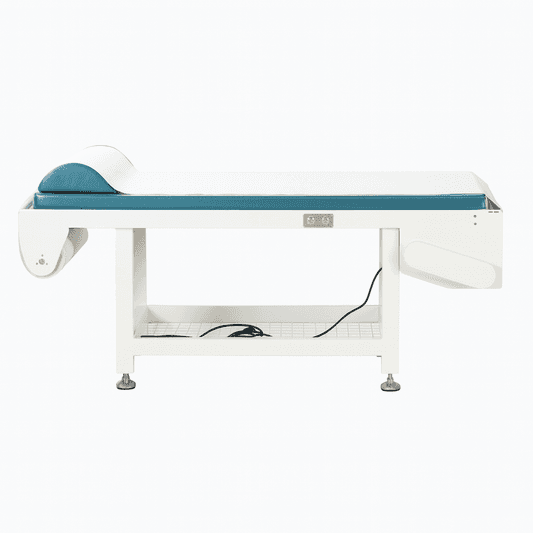
- Examination couch, privacy screen, doctor's stool, spotlight lamp
- Blood pressure monitor, stethoscope, thermometers, pulse oximeter
- Adult/infant weighing scales, height rod, measuring tape
- Glucometer and test strips; urine test strips; basic rapid-test kits as your services require
- Otoscope/ophthalmoscope set, tongue depressors, reflex hammer
- ECG machine (single or multi-channel) if you see adult and chronic patients
- Ultrasound scanner — the biggest single decision in this room. For measurement-and-structure work (abdomen, basic obstetrics, bladder), a B/W unit is fully sufficient and keeps the budget grounded; add color Doppler only when your caseload demands flow studies. (B/W vs Color Doppler Ultrasound: Which Is Right for Your Clinic?) (ultrasound scanners)
Treatment and Procedure Room
- Instrument trolley, dressing sets, kidney dishes, forceps and scissors
- Suction unit; nebulizer for respiratory treatment
- Oxygen concentrator — for a treatment room, a 5L unit covers standard low-flow therapy, while a 10L model gives headroom for varied patients and can serve two low-flow cannulas via a splitter in outreach settings (oxygen concentrators)
- IV stands, tourniquets, sharps containers and color-coded waste bins
- Emergency kit: airway aids, resuscitation bag, emergency drugs box
- Vaccine/medication refrigerator if you will run immunization services
Sterilization Corner
If you reuse any instruments, a steam sterilizer is non-negotiable. Small steam sterilizers are classified under EN 13060 into three classes: Class N units process unwrapped solid instruments only; Class S covers specific wrapped or hollow loads defined by the manufacturer; Class B units use full pre- and post-vacuum cycles and handle wrapped, hollow and porous loads — the safe default where minor surgery or dental work is planned. A tabletop autoclave plus sealing pouches, indicator strips and an instrument-washing station completes the corner. (autoclave range)
Observation and Maternity (If Applicable)
A one- or two-bed observation area needs patient beds, bedside cabinets, screens and basic monitoring. Clinics offering delivery services add an obstetric delivery bed — manual models cover standard positioning needs at a fraction of electric-model cost — plus infant scale, resuscitation area and delivery instrument sets. (hospital and delivery beds)
Budget Tiers: What a Realistic Plan Looks Like
As general planning ranges for the equipment itself (ex-works, excluding fit-out, licensing and consumables — actual figures vary by market and specification):
| Tier | Scope | Indicative Equipment Budget |
|---|---|---|
| Essential GP setup | Consultation room + basic treatment + tabletop sterilizer | ~$3,000–6,000 |
| GP + diagnostics | Adds B/W ultrasound, ECG, oxygen concentrator | ~$6,000–12,000 |
| Extended / maternity-capable | Adds observation beds, delivery bed, higher-spec imaging | ~$12,000–25,000+ |
Two anchors from real price lists help calibrate: entry portable B/W ultrasound scanners typically sit in the $1,000–3,000 band, and medical oxygen concentrators start from about $145 for a 1L unit, with a 10L clinic-grade model like our HP-V05 at $642. The point of the tiers is sequencing — a clinic that opens at tier one and reinvests revenue into tier two usually ends up better equipped than one that spends its whole budget before the first patient.
Practical Buying Tips
Phase the purchases. Everything in the consultation list is needed on day one; imaging and maternity equipment can follow demand.
Check voltage and plugs before ordering. Equipment is built for 110V or 220V markets, and plug types differ by country — confirm both for every powered item, especially when importing directly.
Budget for after-sales, not just purchase. Ultrasound probes, concentrator sieve beds and autoclave gaskets are the parts that wear; ask every supplier about warranty terms and spare-part availability before comparing prices.
Consolidate the shipment. Buying the whole list from one exporter means one QC standard, one set of export documents and one container or consolidated sea shipment instead of five airfreight invoices. (full product range)
FAQ
What is the minimum equipment to open a general practice clinic? The consultation and treatment lists above, plus a sterilizer if you reuse instruments. Confirm against your licensing authority's published minimum list, which is the binding version.
Should I buy an ultrasound machine from day one? If your services include obstetrics or abdominal diagnosis, yes — a B/W unit is the cost-effective entry. If imaging is occasional, refer out for six months and buy once volume justifies it.
Can all of this ship in one order? Yes — ultrasound, concentrators, delivery beds and sterilizers can ship together as one consolidated export shipment with a single documentation set.
110V or 220V — does it matter? It's decisive: a 220V unit on a 110V grid simply won't run. Specify your country's voltage and plug type at quotation stage; most equipment lines are built in both variants.
What do new clinics most often get wrong? Spending the imaging budget before the caseload exists, and forgetting the small items — waste bins, stands, pouches — that licensing inspections actually check.
Planning a clinic or supplying one? Send us your service list and country — we'll return a matched equipment list with specifications, voltage variants and consolidated shipping options. → HOPE INTERNATIONAL