Tabletop vs Vertical Autoclaves for Dental & Clinic Use: Classes, Capacity and How to Choose
September 27, 2026
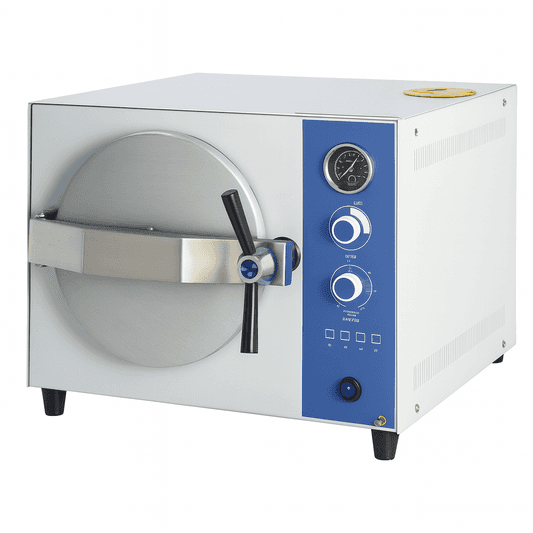
The autoclave is the one machine in a clinic that regulators, inspectors and patients all care about at once. It is also a purchase where the wrong choice is expensive in a quiet way: a sterilizer that can't process wrapped instruments properly doesn't fail loudly — it just leaves you running non-compliant cycles every day. This guide compares the two formats clinics actually choose between — tabletop (benchtop) and vertical (top-loading) autoclaves — and explains the cycle classes that matter more than the brochure photos.
How Steam Sterilization Works, in One Paragraph
An autoclave sterilizes with saturated steam under pressure, typically at 121 °C or 134 °C. The entire engineering challenge is air: any air left in the chamber — or trapped inside a hollow handpiece or a wrapped pouch — insulates the surface it sits against, and that surface never reaches sterilizing conditions. How a machine removes air is therefore what separates one autoclave from another, and it is exactly what the European small-sterilizer standard classifies.
EN 13060: What Class B, S and N Actually Mean
For small steam sterilizers — the tabletop category — EN 13060 defines three cycle types by the loads they can legitimately process:
| Class | Air removal | Loads it can process | Typical use |
|---|---|---|---|
| B | Fractionated vacuum (repeated vacuum pulses) | All load types: solid, hollow and porous items, wrapped or double-wrapped | Dental and medical clinics sterilizing handpieces and pouched instruments — the compliance default |
| S | Defined by the manufacturer | Only the specific load types the manufacturer names in the manual | Niche, defined workflows — check the IFU before assuming anything |
| N | None (gravity displacement) | Unwrapped solid instruments only | Simple naked-instrument turnaround; items are not storable as sterile |
The practical reading for a dental clinic is short: handpieces are hollow, and anything stored between patients must be wrapped — both point to Class B. An N-class machine is not a cheaper way to do the same job; it is a different job. If a quotation says only "autoclave, 18L", ask which EN 13060 class the cycles are certified to before comparing prices.
Cycle parameters are standardized territory: programs run at 134 °C (commonly with holding times in the 3–4+ minute range, plus drying) or 121 °C (commonly 15–20 minutes' hold) — the longer, cooler program protecting heat-sensitive items. Total cycle time including vacuum pulses and drying is what determines your instrument turnaround, and it varies meaningfully between models.
Tabletop Autoclaves: The Clinic Standard
Tabletop units sit on the bench, plug into a normal supply, and run chambers typically from about 8 to 23 liters — with 18L and 23L the workhorse sizes in dental practice. What to look at beyond the class letter:
- Usable tray space, not just chamber volume. Two 18L machines can hold different numbers of cassettes; ask for tray dimensions and count.
- Drying. Vacuum-assisted drying matters for wrapped loads — a pouch that comes out damp isn't storable.
- Water quality and handling. Autoclaves want distilled or demineralized water; auto-fill tanks and water-quality sensors save daily effort.
- Cycle documentation. Inspections ask for records: built-in printers, USB logging or network export cover you.
- Routine testing support. A Class B machine should come with dedicated vacuum-test and Bowie-Dick/Helix test programs — air-removal tests you'll run on a routine schedule, with biological indicators on top per local protocol.
Vertical Autoclaves: Throughput and Liquids
Vertical (top-loading) autoclaves are floor-standing units, typically from around 35 liters up to 100+ liters, loaded from above with baskets or dressing drums. They serve a different profile: hospital wards and CSSD support, laboratories sterilizing media and glassware, and facilities processing textile drums or large instrument volumes in fewer, bigger cycles. Many models offer liquid cycles with slow exhaust — the capability tabletop clinical units generally don't aim at — while air removal on classic vertical designs is gravity-based, with pulse-vacuum variants available where wrapped and porous hospital loads are the point.
Tabletop vs Vertical at a Glance
| Tabletop | Vertical | |
|---|---|---|
| Chamber size | ~8–23 L | ~35–100+ L |
| Placement | Bench, treatment-room adjacent | Floor, utility/sterilization room |
| Typical loads | Wrapped instruments, handpieces, pouches | Instrument baskets, dressing drums, media, glassware |
| Air removal | Class B vacuum (clinic standard) or N gravity | Gravity displacement; pulse-vacuum on higher models |
| Liquids | Generally no | Liquid cycles common |
| Best fit | Dental and outpatient clinics | Labs, wards, high-volume facilities |
Note the standards split behind the table: EN 13060 governs small sterilizers, while large chamber sterilizers fall under EN 285, with ISO 17665 covering moist-heat sterilization validation generally — useful shorthand when a tender asks which standard a machine is built against.
Sizing It for a Dental Clinic
Work backwards from instruments per day. One chair running a full book turns over instrument sets continuously; the question is whether your busiest half-day fits in two or three cycles. An 18L Class B unit is the usual single-chair answer; multi-chair practices step to 23L, and clinics running implant or surgical lists — heavier wrapped sets, more cassettes — are where a second machine or a larger chamber earns its space, because one autoclave down means a clinic scheduling around its sterilizer. Budget the accessories with the machine: cassettes or trays, sealing device and pouches, water treatment, and indicator supplies.
A Buying Checklist
- Confirm the EN 13060 class of the actual cycles — Class B for wrapped and hollow dental loads — and ask for the test documentation behind the claim
- Match chamber size to your busiest half-day, counted in cassettes, not liters
- Check total cycle time including drying at 134 °C — it sets your instrument turnaround
- Verify voltage variant (110/220 V) and plug type for your country, and the machine's power draw against your wiring
- Ask for the certification set for your market (CE / ISO 13485), warranty terms, and the consumables and spare-parts list — door gaskets and filters are routine replacement items (autoclave range)
FAQ
Is a Class N autoclave acceptable for a dental clinic? Only for unwrapped solid instruments used immediately — it cannot properly process hollow handpieces or wrapped pouches, and unwrapped items aren't storable as sterile. For standard dental workflows, Class B is the answer inspectors expect.
Can I sterilize liquids in a tabletop autoclave? Clinical tabletop units are generally not designed for liquid loads; sterilizing media or solutions is vertical-autoclave territory, using dedicated liquid programs with slow exhaust.
Do I really need distilled water? Yes — tap-water minerals scale the steam generator and chamber, shorten the machine's life and can stain instruments. Factor a water distiller or demineralizer into the purchase if you don't already have one.
How long does a Class B cycle take? Plan for total cycle times commonly in the range of tens of minutes once vacuum pulses and drying are included — the exact figure varies by model and load, which is why turnaround-critical clinics size the chamber, or add a second unit, rather than counting on brochure minimums.
Which should a new small clinic buy first? For a general outpatient or dental setup, a tabletop Class B unit covers the sterilization requirement in one purchase; add vertical capacity only when volume, textiles or liquids demand it. (Setting Up a Small Clinic: Essential Equipment Checklist & Budget)
Setting up or upgrading your sterilization room? Tell us your instrument volume and country — we'll recommend chamber sizes and models with full specifications, voltage variants and export documentation. → HOPE INTERNATIONAL