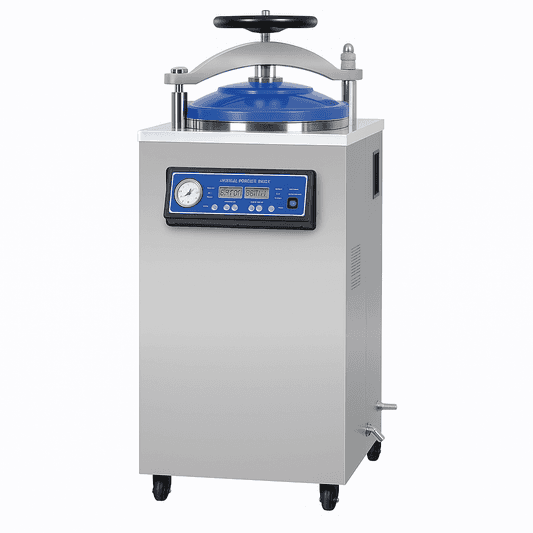
HP-P12 Vertical Autoclave with Dryer
Price, lead time and documents for your market are confirmed in the quotation.
Key takeaways
- HP-P12 is the second of four Dry-version vertical autoclaves, HP-P11 to HP-P14.
- Autoclave drying time depends on load type, wrapping and quantity; the HP-P12 data sheet gives the settings.
- Packs that are stored after sterilization must come out dry, which is what the drying function is for.
HP-P12 is the second model in the Dry version of our vertical line, an autoclave with dryer function for clinics and laboratories. The chamber is upright and loads from the top; the drying stage runs after sterilization so packs leave the chamber ready to store.
HP-P12 sits between HP-P11 and HP-P13. It shares the product photo of the Normal models, HP-P07 to HP-P10; the Dry designation is the difference. If you process wrapped porous loads that need vacuum air removal, look at the Pulse-Vacuum version, HP-P19 to HP-P22.
Key Features
- Upright autoclave machine with dryer, top loading
- Dry version, model HP-P12
- Drying stage after the steam cycle
- Drying method and time settings listed on the data sheet
Applications
Where this vertical autoclave with drying function is typically used:
- Outpatient clinics sterilizing wrapped instrument sets
- Wards and maternity units processing linen and dressing drums
- Laboratories that need dry glassware
How to specify when requesting a quote
- Load types, wrapping material and pack sizes
- Target drying time per load
- Cycles per day
- Voltage, frequency and plug type
- Documents required for your market
Send these details with your inquiry and we will reply with the HP-P12 data sheet and a quotation.
Specifications
| Model | HP-P12 |
|---|---|
| Format | Vertical |
| Sterilization method | Pressure steam (autoclave) |
| Version | Dry |
| Drying function | Yes |
Documents
Certificates, declarations of conformity and test reports for HP-P12 and your destination market are provided with the quotation. Tell us the country of installation and whether the unit is for medical, dental or laboratory use, and we will prepare the matching document package.
The HP-P12 technical data sheet (chamber volume, pressure and temperature ratings, power supply, dimensions and weights) is confirmed with your quote.
Frequently asked questions
+How long does autoclave drying take?
It varies with the load: unwrapped glassware can dry quickly, while dense wrapped packs and linen need longer. Drying method, chamber loading and wrapping all affect it. We state the HP-P12 drying method and time settings on its data sheet so you can plan turnaround.
+Dry vs wet autoclave cycle: what is the difference?
A wet cycle ends after sterilization and exhaust, and items come out damp; it suits unwrapped instruments used straight away, and liquids. An autoclave drying cycle adds a drying stage so that wrapped items can be stored.
+Why does a drying function matter for wrapped instruments?
Moisture left in wrapping can wick microorganisms through the material, so a wet pack is not considered sterile for storage. Drying the load in the chamber before it is removed protects the packs you plan to store.
+How long do autoclaved pouches stay sterile?
Sterility is usually treated as event-related: a pack stays sterile until something compromises it, such as moisture, a tear, a drop or poor storage. Many facilities also set a review date. Store packs dry, clean and away from heavy handling.