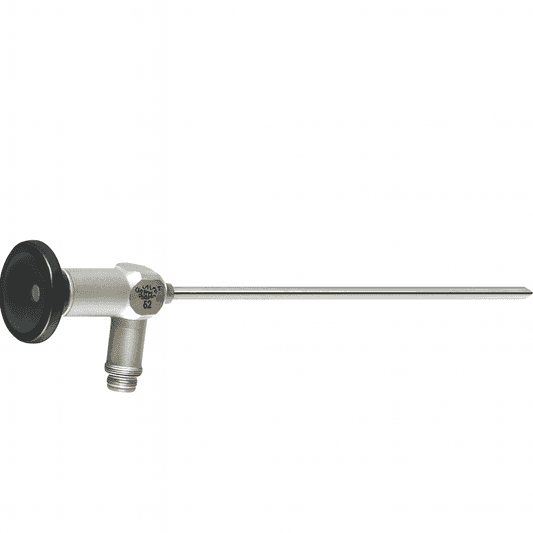
HP-R21 Sinuscope for ENT Clinics and Sinus Surgery
Price, lead time and documents for your market are confirmed in the quotation.
Key takeaways
- HP-R21 is a rigid sinuscope (nasal endoscope) and the first of ten sinuscope models, HP-R21 to HP-R30, in the HOPE INTERNATIONAL range.
- Our device catalog lists the sinuscope series in 0°, 30° and 70° directions of view; the angle, diameter and working length of HP-R21 are confirmed on its datasheet.
- It needs a light source and, for video, an endoscope camera, so ENT buyers can quote the scope together with our camera systems.
A sinuscope is a rigid telescope that ENT surgeons pass through the nostril to examine the nasal cavity, the sinus openings and the nasopharynx. HP-R21 is the first model in our ten-model sinuscope series (HP-R21 to HP-R30), supplied to hospitals, ENT clinics and medical equipment distributors. Buyers also call it a sinus endoscope, and the catalog term sinoscope refers to the same instrument.
Key Features
- Rigid construction with an eyepiece and a side light-guide post, as shown in the series photo.
- Series options in our device catalog: 0°, 30° and 70° directions of view. The configuration of HP-R21 is stated on its datasheet.
- Connects to an endoscope camera through an eyepiece coupler, and to a cold light source through a light guide cable.
- Can be quoted with camera systems, light sources, monitors and trolleys for a complete ENT endoscopy set.
Applications
- Diagnostic nasal endoscopy in ENT outpatient clinics.
- Functional endoscopic sinus surgery (FESS) in the operating room.
- Post-operative follow-up and image documentation for records and teaching.
How to specify when requesting a quote
- Direction of view you need: 0° for a straight view, 30° or 70° to look into the sinus openings.
- Outer diameter and working length, if your department has a standard for adult or pediatric use.
- The camera and light source you will connect, so we can confirm the eyepiece and light post fit.
- Quantity per model, destination country and the documents your registration or tender requires.
Specifications
| Model | HP-R21 |
|---|---|
| Product type | Sinuscope (rigid nasal / sinus endoscope) |
| Construction | Rigid |
| Series | HP-R21 to HP-R30 (10 models) |
| Direction-of-view options listed for the series | 0° / 30° / 70° |
Documents
Certificates, declarations of conformity and test reports for the specific model and destination market are provided with the quotation.
Ask for the HP-R21 datasheet and instructions for use, including the cleaning and sterilization instructions, before you order. Tell us the destination country and the documents your import license, registration or tender requires.
Frequently asked questions
+What is a sinuscope used for?
A sinuscope gives ENT surgeons a magnified, well-lit view inside the nose. It is used for diagnostic nasal endoscopy in the clinic, for functional endoscopic sinus surgery, and for checking healing after surgery. HP-R21 is a rigid sinuscope and needs a light source and, for video, a camera system.
+How long is a sinuscope?
Sinuscope length is given as the working length, the part of the shaft that enters the nose. Adult sinuscopes are longer than the short versions made for children. The working length of HP-R21 is stated on its datasheet, which we send with the quotation.
+What does the colour coding on a nasal endoscope mean?
Nasal endoscope colour coding marks the direction of view with a colored ring. A widely used convention is green for 0°, red for 30° and yellow for 70°, but markings vary by maker, so always read the angle engraved on the scope and on its datasheet.
+Which sinuscope angle should an ENT clinic buy first?
A 0° scope looks straight ahead and is the easiest to orient, so many clinics start there. A 30° scope helps inspect the sinus openings and the side wall of the nose, and a 70° scope looks around corners such as the frontal recess. Many departments keep 0° and 30° as a pair.