Importing Medical Equipment: Voltage, Plugs and Certificates by Region
September 27, 2026
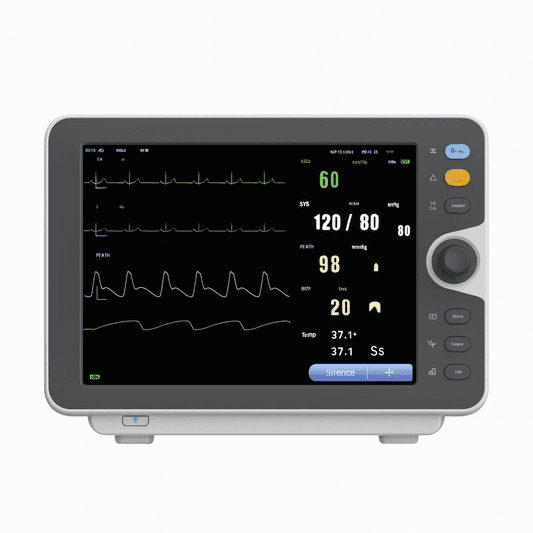
An ultrasound scanner that arrives with the wrong plug is a minor annoyance — a $2 adapter fixes it. A sterilizer built for the wrong voltage is a dead unit, and a compressor-driven machine run on the wrong frequency is a warranty claim waiting to happen. Before any medical equipment order crosses a border, three questions need answers in writing: what electricity does the destination use, what connector goes on the wall, and what papers must travel with the machine. This guide answers all three, region by region.
Voltage and Frequency by Region
Mains power worldwide falls into two big families — 220–240 V at 50 Hz, and 100–127 V at 60 Hz — plus a handful of important exceptions that don't follow their neighbors:
| Region | Typical mains | Notes and exceptions |
|---|---|---|
| USA & Canada | 120 V, 60 Hz | Hospital circuits also provide 208/240 V for larger equipment |
| Mexico & Central America | 127 V, 60 Hz | — |
| Brazil | 127 or 220 V, 60 Hz | Varies by state — confirm the actual city, not just "Brazil" |
| South America (ex-Brazil) | Mixed | Argentina/Chile 220 V, 50 Hz; Peru 220 V, 60 Hz; Colombia & Ecuador ~110–120 V, 60 Hz |
| Europe (incl. UK, Russia/CIS) | 230 V, 50 Hz | The most uniform region |
| Middle East | 220–240 V, 50 Hz | Saudi Arabia is the exception: 230 V at 60 Hz after unifying its grid standard |
| Africa | 220–240 V, 50 Hz | Generally consistent; voltage stability, not nominal voltage, is the real issue |
| China & Southeast Asia | 220–230 V, 50 Hz | Philippines: 220 V, 60 Hz; Taiwan 110 V, 60 Hz |
| Japan | 100 V, 50/60 Hz | Unique low voltage; east runs 50 Hz, west 60 Hz |
| South Korea | 220 V, 60 Hz | An often-missed 60 Hz country |
| India & South Asia | 230 V, 50 Hz | Voltage fluctuation common — stabilizers widely used |
| Australia & New Zealand | 230 V, 50 Hz | — |
The order-time rule: state the destination country and city on the proforma invoice and have the factory confirm the build voltage back in writing. Reputable manufacturers produce 110 V-class and 220 V-class variants of the same model — the wrong one helps nobody.
Why Frequency Matters (Sometimes)
Modern electronics — ultrasound scanners, patient monitors — usually run on switch-mode power supplies rated 100–240 V, 50/60 Hz, and genuinely don't care. Equipment with motors, compressors and pumps does care: a compressor designed for 50 Hz runs roughly 20% faster on 60 Hz, drawing more current and wearing sooner. Oxygen concentrators are the classic case in our range — the compressor is the heart of the machine, so the 60 Hz markets (the Americas, Saudi Arabia, the Philippines, Korea) need units built for 60 Hz, not adapted to it. Purely resistive heating loads, such as a steam sterilizer's heating element, are tolerant of frequency but still voltage-critical. When in doubt, send the factory the nameplate values you need and let engineering confirm. (oxygen concentrators)
A related caution: step-up/step-down transformers are a workaround for a mismatched unit, but they add cost, bulk and a failure point, do nothing about frequency, and can void warranties. Order the right build instead.
Plugs and Power Cords
| Plug type | Where it lives |
|---|---|
| A / B (flat blades) | USA, Canada, Mexico, Japan, Taiwan, Philippines |
| C / E / F ("Schuko" family) | Continental Europe, Russia/CIS, much of Africa, Middle East, Indonesia, Korea |
| G (three rectangular pins) | UK, Ireland, Singapore, Malaysia, Hong Kong, Gulf states incl. Saudi Arabia |
| I (angled blades) | Australia, New Zealand, China, Argentina |
| D / M (round triangular pins) | India, Sri Lanka, Nepal; M in South Africa alongside its newer standard |
| N | Brazil's own standard |
The good news: most mains-powered medical equipment uses a detachable IEC 60320 cord (the familiar C13/C14 "kettle lead" and its variants), so the market-specific part is just the cord set — cheap to supply and easy to specify. Two refinements worth knowing: North American healthcare facilities often specify hospital-grade plugs (the green-dot NEMA plugs with reinforced construction), and any destination with unstable mains deserves a conversation about voltage stabilizers rather than hope.
Certificates by Region: What Regulators Ask For
Medical equipment faces two overlapping approval layers: medical device regulation (safety and performance as a medical product) and, in some markets, electrical certification on top. The anchor standard underneath both is IEC 60601-1 (electrical safety for medical equipment) with its EMC companion IEC 60601-1-2 — test reports against these, ideally as a CB Scheme report, travel well across borders and shorten many national approvals.
| Market | What to look for |
|---|---|
| EU | CE marking under the MDR with notified-body involvement for the classes covering typical clinic equipment (diagnostic ultrasound and oxygen concentrators are commonly Class IIa); Declaration of Conformity; EU authorized representative |
| USA | FDA establishment registration + device listing; 510(k) clearance for Class II devices — which covers most diagnostic ultrasound and oxygen concentrators |
| UK | CE-marked devices remain accepted in Great Britain under transitional rules (with proposals to extend recognition); UKCA is the domestic route; MHRA registration via a UK Responsible Person |
| Saudi Arabia | SFDA medical device registration with a Saudi authorized representative |
| UAE / Gulf | Ministry of Health registration (MOHAP in the UAE); CE accepted as the technical basis |
| Brazil | ANVISA registration plus INMETRO electrical certification |
| Mexico | COFEPRIS registration |
| India | CDSCO import license for regulated device categories |
| Australia | TGA inclusion in the ARTG |
| Much of Africa & Asia | National registration (e.g. NAFDAC in Nigeria, PPB in Kenya, SAHPRA in South Africa) or acceptance of CE plus a Certificate of Free Sale |
Registration regimes change and device classes vary with intended use, so treat this table as a map, not a rulebook — confirm current requirements with your local agent or registrar before the order, since the registration holder is usually a local entity, not the factory.
The Document Pack to Request From Your Supplier
For each model, a complete export file looks like: CE certificate and Declaration of Conformity (with the device class stated), ISO 13485 certificate for the manufacturing site, IEC 60601-1 / 60601-1-2 test reports or CB certificate, Certificate of Free Sale where your registrar needs it, user manual in the required language, and a proforma invoice that states voltage, frequency, plug type and manual language per line item. Serial-number-level warranty terms and a spare-parts list round out the set. (full product range)
A Five-Step Order Checklist
- Confirm destination country and city → factory confirms build voltage and frequency in writing
- Specify plug type or IEC cord set, plus manual and label language
- Match the device class and registration route for your market; appoint the local registration holder early
- Collect the document pack above before the deposit, and verify names, models and dates match
- On arrival, check nameplate voltage against the order before first power-up
FAQ
Can I just use a transformer if the voltage is wrong? As a rescue, sometimes; as a plan, no. Transformers add cost and a failure point, don't convert frequency, and can void the warranty — compressor-driven equipment in particular should be built for the destination grid.
Do 110 V and 220 V versions cost different amounts? Usually not meaningfully — the difference is components, not construction. What costs money is discovering the mismatch after shipment.
My country has no strict device registration — what should I ask for? CE marking plus a Certificate of Free Sale and IEC 60601 test reports is the package most lightly-regulated markets and tender committees expect. It also future-proofs you as regimes tighten.
Who holds the registration — me or the manufacturer? In most regulated markets the license is held or sponsored by a local entity: an authorized representative, importer or distributor. Agree who that is, and who keeps the registration if you change suppliers, before committing.
Tell us your destination country and quantity — we'll confirm the correct voltage build, plug type and the full certificate pack for your market. → HOPE INTERNATIONAL