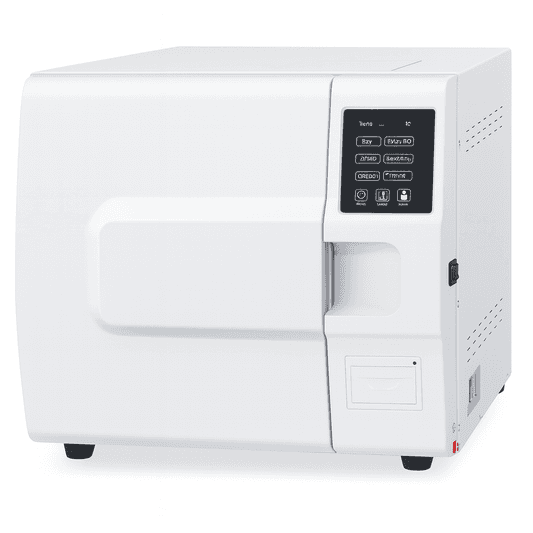
HP-P37 Table Top Vacuum Autoclave (Pulse-Vacuum Type)
Price, lead time and documents for your market are confirmed in the quotation.
Key takeaways
- HP-P37 is the third of four table top vacuum autoclaves, pulse-vacuum type, HP-P35 to HP-P38.
- Vacuum autoclave cycle time covers air removal, heat-up, holding, exhaust and drying, not just the sterilizing hold.
- Program times and chamber data for HP-P37 come on its data sheet with the quote.
HP-P37 is the third table top vacuum autoclave in our HP-P35 to HP-P38 group. For busy clinics, vacuum autoclave cycle time decides how many instrument sets can be turned around per day, so we give program times on the data sheet.
HP-P37 sits between HP-P36 and HP-P38 and shares their product photo. Compare program times across the group, and against the HP-P32 to HP-P34 models, to match a unit to your patient schedule.
Key Features
- Table top vacuum autoclave machine, pulse-vacuum type
- Model HP-P37
- Vacuum air removal before sterilization
- Program times listed on the data sheet
Applications
Where cycle time matters for a benchtop autoclave sterilizer:
- Multi-chair dental practices
- Day-surgery and minor procedure rooms
- Clinics running one sterilizer for several rooms
How to specify when requesting a quote
- Instrument sets per day and peak hours
- Share of pouched versus unwrapped loads
- Required cycle class and records
- Voltage, frequency and plug type
- Destination country and documents, so the vacuum autoclave price includes them
Send these details with your inquiry and we will reply with the HP-P37 data sheet and a quotation.
Specifications
| Model | HP-P37 |
|---|---|
| Format | Table top |
| Sterilization method | Steam |
| Air removal method | Pulse vacuum |
Documents
Certificates, declarations of conformity and test reports for HP-P37 and your destination market are provided with the quotation. Tell us the country of installation and whether the unit is for medical, dental or laboratory use, and we will prepare the matching document package.
The HP-P37 technical data sheet (chamber volume, pressure and temperature ratings, power supply, dimensions and weights) is confirmed with your quote.
Frequently asked questions
+What is a typical vacuum autoclave cycle time?
It depends on the program and load. Total time includes vacuum pulses, heat-up, the holding time at temperature, exhaust and drying, and drying often takes a large share. We list HP-P37 program times on its data sheet so you can plan turnaround.
+Which temperature programs do dental autoclaves use?
Most dental cycles run at 134 °C; a 121 °C program with a longer hold is used for items that tolerate less heat. Check which temperatures HP-P37 offers on its data sheet.
+How do you record autoclave cycles for audits?
Keep a record of each cycle's program, temperature, pressure and time, together with indicator results, using a built-in printer, data export or a manual log. Ask which recording options are available for HP-P37.
+Why does drying take so long in a vacuum autoclave?
Pouches, wraps and dense metal instruments hold condensate, and it must be evaporated before the door opens so packs stay sterile. Overloading and poor pouch placement extend drying; follow the tray loading guidance in the manual.