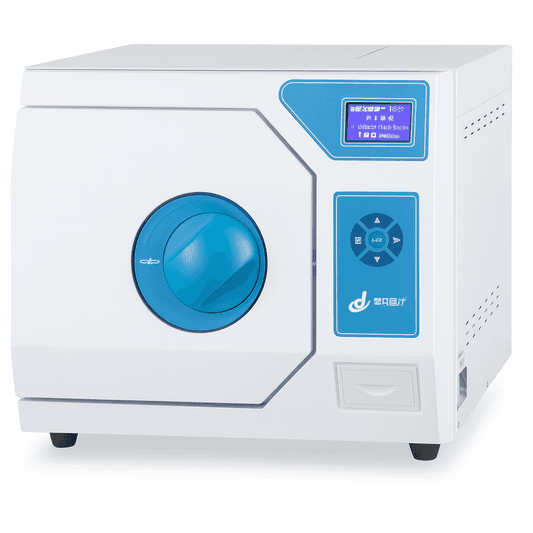
HP-P34 Table Top Pulse Vacuum Autoclave
Price, lead time and documents for your market are confirmed in the quotation.
Key takeaways
- HP-P34 is the third of three table top pulse vacuum autoclaves, HP-P32 to HP-P34.
- A pre vacuum autoclave cycle runs air removal, heat-up, holding, exhaust and drying.
- HP-P34 shares its product photo with HP-P33; program times and chamber data are on the data sheet.
HP-P34 is the third table top pulse vacuum autoclave in our P range. Understanding the pre vacuum autoclave cycle helps you judge turnaround: air removal and drying add time before and after the sterilizing hold.
HP-P34 closes the HP-P32 to HP-P34 group and shares a product photo with HP-P33. For the next table top group, see HP-P35 to HP-P38, which is shown with a different photo.
Key Features
- Table top pulse vacuum steam sterilizer
- Model HP-P34, pulse-vacuum type
- Vacuum pulses before sterilization for air removal
- Data sheet with program list and times
Applications
Typical users of a pulse vacuum sterilizer this size:
- Dental practices with several chairs
- Day-surgery and specialist clinics
- Veterinary clinics
How to specify when requesting a quote
- Loads per day and turnaround target
- Instrument mix and pouching
- Required cycle class and records
- Voltage, frequency and plug type
- Destination country and documents
Send these details with your inquiry and we will reply with the HP-P34 data sheet and a quotation.
Specifications
| Model | HP-P34 |
|---|---|
| Format | Table top |
| Sterilization method | Steam |
| Air removal method | Pulse vacuum |
Documents
Certificates, declarations of conformity and test reports for HP-P34 and your destination market are provided with the quotation. Tell us the country of installation and whether the unit is for medical, dental or laboratory use, and we will prepare the matching document package.
The HP-P34 technical data sheet (chamber volume, pressure and temperature ratings, power supply, dimensions and weights) is confirmed with your quote.
Frequently asked questions
+What happens in a pre vacuum autoclave cycle?
First, vacuum pulses alternate with steam to remove air. Then the chamber heats to sterilizing temperature and holds it for the set time. Steam is exhausted, and a drying phase, often under vacuum, removes moisture before the door is opened.
+Class B vs Class S autoclave: which should a clinic choose?
If you process a wide mix, including pouched instruments and handpieces, Class B cycles cover all load types. Class S may be enough if the manufacturer's named loads match yours exactly. Confirm the HP-P34 cycle class and load list on its data sheet.
+How do I plan instrument turnaround around a vacuum cycle?
Total cycle time is the sum of air removal, heat-up, holding, exhaust and drying, and it changes with load size and packaging. Ask for the HP-P34 program times to plan instrument turnaround.
+What is a Class B autoclave used for?
Dental and medical practices use Class B sterilizers for wrapped instruments, handpieces and other hollow devices, textiles and porous loads, because the fractionated vacuum removes air from all of them.